We will present the performance, safe operation methods, and technical parameters of idroelettricità
Brief introduction
L'energia idroelettrica utilizza l'energia potenziale di fiumi, laghi e altri fiumi e laghi per convertire l'energia potenziale in essa contenuta nell'energia cinetica della turbina, quindi utilizza la turbina idroelettrica come forza motrice per promuovere il generatore per generare energia elettrica. Se un'altra macchina (generatore) è collegata alla turbina dell'acqua, l'elettricità può essere generata mentre la turbina dell'acqua ruota e l'energia meccanica viene convertita in energia elettrica. In un certo senso, l'energia idroelettrica è il processo di conversione dell'energia potenziale dell'acqua in energia meccanica e quindi in energia elettrica. Poiché la tensione di potenza emessa dalla centrale idroelettrica è bassa, da trasmettere agli utenti a lunga distanza, la tensione deve essere aumentata attraverso il trasformatore e quindi trasportata alla sottostazione nell'area di concentrazione dell'utente dalla linea di trasmissione a rack vuota, E infine ridotto alla tensione adatta per gli utenti domestici e le apparecchiature elettriche di fabbrica, e trasmesso a ciascuna fabbrica e casa dalla linea di distribuzione.
principle
How does idroelettricità work? The whole process of animation shows the whole process, and years of doubts are solved
The basic principle of idroelettricità generation is to use the water level drop to generate electricity with the hydro turbine generator, that is, to use the potential energy of water to convert into the mechanical energy of the water turbine, and then use the mechanical energy to push the generator to obtain electricity. Scientists have used the natural conditions of the water level drop to effectively use fluid engineering and mechanical physics to achieve the highest power generation and provide people with cheap and pollution-free electricity.
while low-level water is distributed throughout the earth by absorbing sunlight, thereby restoring high-level water sources.
In 1882, the first recorded application of hydroelectric power was in Wisconsin, USA. Today, the scale of idroelettricità generation ranges from tens of watts used in the countryside of the third world to millions of watts for power supply in large cities.
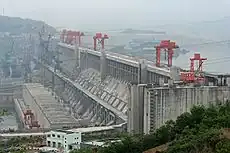
class
According to the classification of concentrated drops, there are: embankment idroelettricità plants, diversion idroelettricità plants, hybrid idroelettricità plants, tidal idroelettricità plants and pumped storage power plants.
According to the degree of runoff regulation, there are: unregulated idroelettricità plants and regulated idroelettricità plants.
According to the nature of water sources, it is generally called conventional idroelettricità stations, that is, using natural rivers, lakes and other water sources to generate electricity.
According to the size of the water head used by the idroelettricità station, it can be divided into high head (more than 70 meters), medium head (15-70 meters) and low head (less than 15 meters) idroelettricità stations.
According to the installed capacity of idroelettricità stations, they can be divided into large, medium and small idroelettricità stations. Generally, the installed capacity of less than 5,000kW is called small idroelettricità stations, those with an installed capacity of 5,000 to 100,000kW are called medium-sized idroelettricità stations, and those with an installed capacity of 100,000kW or more are called large idroelettricità stations or giant idroelettricità stations.
process
When the unit needs to run to generate electricity, open the main valve (similar to the function of the faucet at home), and then open the guide wing (a small water gate that actually controls the output force) to make the water impact the turbine. If you want to adjust the output of the generator set, you can adjust the opening of the guide wing to increase or decrease the amount of water to achieve it, and the water after power generation returns to the river through the tail channel to supply the downstream water.
advantage
Water
Hydro energy is an inexhaustible, inexhaustible and renewable clean energy source. However, in order to effectively use natural water energy, it is necessary to manually build hydraulic buildings that can concentrate the water drop and regulate the flow, such as dams, diversion pipes and culverts. Therefore, the project investment is large and the construction period is long. However, idroelettricità generation has high efficiency, low power generation cost, fast unit start-up, and easy adjustment. Due to the use of natural water flow, it is greatly affected by natural conditions. Hydropower is often an important part of the comprehensive utilization of water resources, and together with shipping, aquaculture, irrigation, flood control and tourism, it forms a comprehensive water resources utilization system.
generate electricity
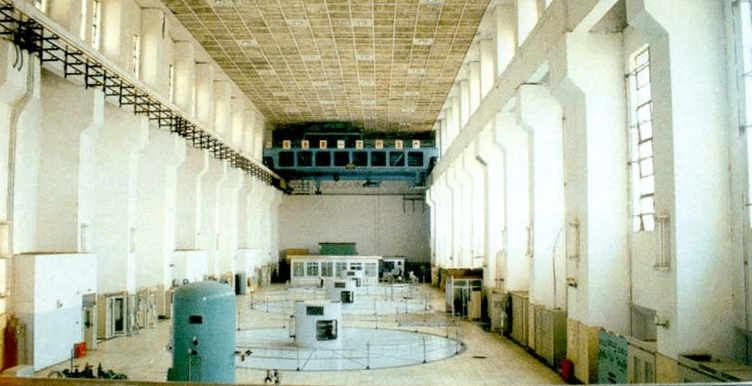
Hydropower is a renewable energy source with a low environmental impact. In addition to providing cheap electricity, it also has the following advantages: flood control, irrigation water, improved river navigation, and improved transportation, electricity supply and economy in the area, especially tourism and aquaculture. The comprehensive development plan of the Tennessee River in the United States is the first large-scale water conservancy project, driving the overall economic development.
shortcoming
General overview
1. Due to terrain limitations, it is not possible to build too large capacity. The capacity of the unit is about 300MW.
2. The construction period of the factory is long and the construction cost is high.
3. Because it is located in natural rivers or lakes, it is susceptible to feng shui disasters, affecting other water conservancy undertakings. Power output is susceptible to weather drought and rain.
4. It is not easy to increase capacity after the factory is built.
5. Ecological damage: intensified erosion of water flow below the dam, changes in rivers and their impact on animals and plants, etc.
6. Damming is needed to immigrate, etc., and the investment in infrastructure construction is large.
7. The fertile alluvial soil downstream is reduced by erosion.
Ecological impact
Huge dams that flood a wide range of upstream areas can destroy biodiversity, productive lowlands, river valley forests, wetlands and grasslands, and reservoirs built for idroelettricità can cause fragmentation of habitats in surrounding areas and worsen soil erosion.
Hydropower projects affect aquatic ecosystems upstream and downstream of the surrounding area. For example, studies have shown that dams along the Atlantic and Pacific coasts of North America reduce salmon populations that need to spawn upstream because dams prevent these fish from spawning upstream in breeding grounds. Although fish ladders are installed in the largest dams in salmon habitats, this is not avoided. Young salmon are also suffering damage because they have to pass through turbines in power stations as they migrate to the sea. To protect these fish, some parts of the United States transport small salmon downstream by yacht during parts of the year. In exceptional cases, some dams, such as the Marmot Dam, have been removed due to their impact on fish. How to design turbine generators that cause less damage to aquatic life is an active area of research. Some mitigation measures, such as fish ladders, have become a requirement for new project approvals and review of existing projects in some countries.
For example, the construction of large-scale water conservancy projects in the Yangtze River Basin has seriously affected the migration routes and breeding grounds of the Chinese sturgeon, causing its population to decline sharply and be in danger of extinction.
Environmental impact
Environmental Impacts of Hydropower GenerationEnvironmental Impacts of Hydropower GenerationEnvironmental Impacts of Hydropower Generation
1. Geography: Huge reservoirs may cause surface activity and even induce earthquakes. In addition, it will also cause hydrological changes in the basin, such as a decrease in the downstream water level or a decrease in sediment from the upstream. After the completion of the reservoir, due to the large evaporation, the climate is cool and stable, and the rainfall is reduced.
2. Biological aspects: For terrestrial animals, after the completion of the reservoir, a large number of wild animals and plants may be submerged and killed, or even completely extinct. For aquatic animals, after the completion of the reservoir, due to changes in the upstream ecological environment, fish will be affected, resulting in extinction or population reduction.
At the same time, due to the expansion of the upstream water area, the habitat of certain organisms (such as snails) has increased, creating conditions for the spread of some regional diseases such as schistosomiasis.
3. Physical and chemical properties: The water flowing into and out of the reservoir changes in terms of physical and chemical properties such as color and odor, and the density, temperature, and even solubility of each layer of water in the reservoir are different. The water temperature of deep water is low, and the organic matter at the bottom of the sedimentary reservoir cannot be fully oxidized in anaerobic decomposition, and the carbon dioxide content of the water body increases significantly.
Classificare
According to the nature of water sources, they can be divided into: conventional idroelettricità stations, that is, using natural rivers, lakes and other water sources to generate electricity.
Pumped storage power stations use the excess electricity at the trough of the power grid load to pump the water from the lower reservoir to the high place for storage, release water to generate electricity when the load of the grid is at its peak, and collect the tail water in the lower reservoir.
According to the means of developing water heads of idroelettricità stations, it can be divided into:
There are three basic types: dam idroelettricità station, diversion idroelettricità station and hybrid idroelettricità station.
According to the size of the water head used by the idroelettricità station, it can be divided into:
High head (above 70 meters), medium head (15-70 meters) and low head (less than 15 meters) idroelettricità station.
According to the size of the installed capacity of idroelettricità stations, it can be divided into:
Large, medium and small idroelettricità stations. Generally, small idroelettricità stations with an installed capacity of less than 5 000 kW, medium-sized idroelettricità stations with 5 000 to 100,000 kW or more, and large idroelettricità stations with a capacity of 100,000 kW or more are large or mega idroelettricità stations.
evolution
Nel 1878, la Francia costruì la prima centrale idroelettrica del mondo. La prima centrale idroelettrica nelle Americhe fu costruita sul fiume Fox ad Appleton, Wisconsin, USA, composta da due generatori CC azionati da una ruota idraulica, con una capacità installata di 25kW, e fu generata il 30 settembre 1882. La prima centrale idroelettrica commerciale in Europa fu la centrale idroelettrica di Tevoli in Italia, costruita nel 1885 con una capacità installata di 65kW. Dagli anni '90 del XIX secolo, l'energia idroelettrica è stata apprezzata in molti paesi del Nord America e dell'Europa, e un certo numero di centrali idroelettriche da decine a migliaia di kilowatt sono state costruite utilizzando terreni eccellenti come fiumi turbolenti, acque che cadono e cascate in aree montuose. Nel 1895, una grande centrale idroelettrica da 3750kW a turbina fu costruita alle Cascate del Niagara, al confine tra Stati Uniti e Canada. Dopo essere entrati nel 20 ° secolo, a causa dello sviluppo della tecnologia di trasmissione a lunga distanza, le risorse idrauliche in aree remote sono state gradualmente sviluppate e utilizzate e l'energia è stata fornita alle città e ai centri energetici. Dagli anni '30, la velocità e la scala della costruzione di energia idroelettrica si sono sviluppate sempre più velocemente e, grazie al progresso della scienza e della tecnologia come la costruzione di dighe, macchinari ed elettricità, è stato possibile costruire vari tipi e scale di progetti idroelettrici in condizioni naturali molto complesse. Le risorse idroelettriche sfruttabili nel mondo sono circa 2,261 miliardi di kW, che sono distribuite in modo non uniforme e il grado di sfruttamento varia da paese a paese.
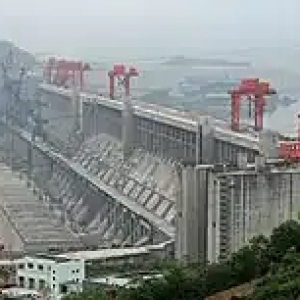
La Cina è il Paese con le risorse idroelettriche più ricche al mondo, con una capacità sviluppabile di circa 378 milioni di kW. La prima centrale idroelettrica in Cina continentale fu la centrale idroelettrica di Shilongba (vedi mappa a colori) costruita sul fiume Mantis nella provincia di Yunnan, che fu costruita nel luglio 1910 e generò elettricità nel 1912, con una capacità installata di 480 kW a quel tempo, e successivamente ricostruita ed ampliata in fasi, alla fine raggiungendo 6000 kW. Prima della fondazione della Repubblica Popolare Cinese nel 1949, c'erano 42 centrali idroelettriche costruite e parzialmente costruite in tutto il paese, con una capacità installata totale di 360.000 kW, e la produzione annuale di energia elettrica era di 1,2 miliardi di kW · h (esclusa Taiwan). Dopo il 1950, la costruzione idroelettrica si è notevolmente sviluppata, con una singola centrale idroelettrica con una capacità installata di oltre 250.000 kW come grande, tra 25.000 ~ 250.000 kW come media, e sotto 25.000 kW come piccola. La più grande di queste è la diga delle Tre Gorges sul fiume Yangtze. Un gran numero di centrali idroelettriche di medie dimensioni sono state costruite su alcuni fiumi, alcuni dei quali sono collegati in serie come cascate. Inoltre, un gran numero di piccole centrali idroelettriche sono state costruite su alcuni fiumi e fossati di piccole e medie dimensioni. Alla fine del 1987, la capacità installata di idroelettricità in Cina era di 30,19 milioni di kW (esclusi le piccole centrali idroelettriche al di sotto di 500 kW), e la capacità installata totale delle piccole centrali idroelettriche era di 11,1 milioni di kW (compresi i piccoli impianti idroelettrici al di sotto di 500 kW, vedere piccole centrali idroelettriche). Il 25 agosto 2010, il più grande singolo progetto di investimento nella provincia di Yunnan, la centrale idroelettrica di Huaneng Xiaowan Unit 4 (capacità installata di 700.000 kilowatt), è stato ufficialmente messo in funzione per la generazione di energia elettrica, diventando un punto di riferimento con una capacità installata di oltre 200 milioni di kilowatt in Cina, e la capacità totale installata del nostro paese di idroelettricità è saltata al primo posto nel mondo.
China is one of the countries with the richest water resources in the world, with a developable installed capacity of 542 million kilowatts of hydroenergy resources and an economic developed installed capacity of 402 million kilowatts, and the development potential is still very large.
prospect
In alcuni paesi con abbondanti risorse idrauliche ma basso sviluppo (compresa la Cina), lo sviluppo dell 'energia idroelettrica sarà prioritaria in base alle condizioni locali in futuro. Nei paesi e nelle regioni in cui il grado di sfruttamento delle risorse idroelettriche è stato elevato o le risorse idrauliche sono scarse, è imperativo espandere e trasformare le centrali idroelettriche esistenti, e il numero di centrali elettriche di stoccaggio pompato costruite in combinazione con la costruzione di centrali nucleari aumenterà. Oltre a concentrarsi sulla costruzione di centrali idroelettriche su larga scala in Cina, le centrali idroelettriche di piccole e medie dimensioni riceveranno ulteriore attenzione a causa del loro breve periodo di costruzione, rapido effetto e basso impatto sull 'ambiente. Con la riforma del sistema dei prezzi dell 'elettricità, i benefici economici della generazione idroelettrica possono essere più adeguatamente rifletti e valutati, il che è propizio all' assorbimento degli investimenti e all 'accelerazione della costruzione idroelettrica. Nei lavori preliminari della costruzione idroelettrica, saranno sviluppate e diffuse nuove tecnologie di rilevamento come il rilevamento a distanza, la telemetria, l'esplorazione geofisica, il computer e la progettazione assistita da computer. Le inondazioni, i sedimenti, la migrazione del bacino, la protezione ambientale e altre questioni saranno gestite in modo più adeguato; l'automazione e la telemobilizzazione delle centrali idroelettriche saranno ulteriormente migliorate e promosse; Lo sviluppo di materiali a lunga distanza, ad alta tensione, superconduttori e altre tecnologie di trasmissione contribuirà ad accelerare lo sviluppo di abbondanti risorse idroelettriche nella Cina occidentale e trasmettere l'elettricità alle aree costiere orientali.
With the implementation of the national "energy conservation and emission reduction" policy, energy substitution emission reduction has become China's practical choice, idroelettricità has become the first choice for renewable energy, and idroelettricità enterprises with cost advantages at this stage will enter the fast lane of rapid development. Therefore, domestic excellent idroelettricità companies pay more and more attention to the research of the industrial market, especially the in-depth study of the industry development environment and industrial buyers. Because of this, a large number of excellent domestic idroelettricità companies have risen rapidly and gradually become leaders in China's idroelettricità industry!
The former world's largest hydroelectric turbine rotor was processed in the Three Gorges Dam area and loaded and shipped to the Jinsha River Xiangjiaba Hydropower Station. So far, the Three Gorges Dam area has the ability to process the world's largest idroelettricità unit rotors.
Xiangjiaba Hydropower Station, located in the lower reaches of the Jinsha River, is the fourth largest power station in the world, with a single unit capacity of 812,000 kilowatts, surpassing the Three Gorges to become the world's largest idroelettricità unit. The runner that started yesterday, with a maximum diameter of 10.5 meters, a height of 4.7 meters and a weight of 406 tons, is the core component of Unit 3 of Xiangjiaba Power Station, and its size, weight, technical content and manufacturing difficulty are the largest in the world today.
In 2012, global idroelettricità generation increased by 4.3%, higher than the historical average, and all net growth came from China, accounting for 100% of the annual net growth of global idroelettricità, setting a record for the largest annual increase in a single country in the data sheet. According to domestic statistics, in 2012, the new installed capacity of idroelettricità in China was 15.51 million kilowatts. By the end of 2012, the installed capacity of idroelettricità generation reached 248.9 million kilowatts (including pumped storage 20.31 million kilowatts), accounting for 21.7% of the country's installed power capacity, and the idroelettricità generation capacity was 864.1 billion kWh, an increase of 29.3% year-on-year, accounting for 17.4% of the national power generation, an increase of 3.2 percentage points over the previous year, and in 2012, the average utilization hours of idroelettricità power generation equipment of 6,000 kilowatts and above were 3,555 hours, an increase of 536 hours year-on-year.
In 2012, China's idroelettricità consumption reached 194.8 million tons of oil equivalent, an increase of 22.8 from the previous year (2011) of 158.2 million tons of oil equivalent; In 2012, China's idroelettricità consumption was 194.8 million tons of oil equivalent, accounting for 23.4% of the global idroelettricità consumption of 831.1 million tons of oil equivalent, making it the world's largest producer/consumer of idroelettricità and the second largest producer/consumer of idroelettricità. 206 of the consumption (94.5 million tonnes of oil equivalent).
technology
Ricerca sulla scienza e la tecnologia della costruzione ingegneristica, produzione e funzionamento della conversione dell 'energia idrica in elettricità. L'energia idrica utilizzata dalla generazione idroelettrica è principalmente energia potenziale immagazzinata nei corpi d'acqua. Per convertire l'acqua in elettricità, è necessario costruire diversi tipi di centrali idroelettriche.È una misura ingegneristica composta da una serie di edifici e attrezzature. L'edificio è principalmente utilizzato per concentrare la goccia del flusso d'acqua naturale, formare una testa d'acqua e utilizzare il serbatoio per raccogliere e regolare il flusso del flusso d'acqua naturale. L'attrezzatura di base è un gruppo generatore di idroturbine. Quando il flusso d'acqua entra nella turbina attraverso l'edificio di diversione della stazione idroelettrica, la turbina è guidata dal flusso d'acqua per ruotare, in modo che l'energia idrica sia convertita in energia meccanica. La turbina idrica guida il generatore per generare elettricità, e l'energia meccanica viene convertita in energia elettrica, che viene poi inviata all 'utente attraverso la sottostazione e le apparecchiature di trasmissione e distribuzione. L'energia idrica è una fonte di energia rinnovabile in natura, che viene ripetutamente rigenerata con il ciclo idrologico. L'energia idrica e i combustibili fossili sono entrambe fonti energetiche primarie di risorsa, che vengono chiamate fonti energetiche secondarie quando convertite in energia elettrica. La costruzione idroelettrica è una costruzione di energia che completa lo sviluppo dell 'energia primaria e la produzione di energia secondaria allo stesso tempo, senza consumare carburante durante il funzionamento, e la tassa di gestione dell' operazione e il costo della generazione di energia elettrica sono molto inferiori a quelli delle centrali elettriche a carbone. L'energia idroelettrica non subisce cambiamenti chimici nel processo di conversione dell 'energia idrica in elettricità, non escrece sostanze nocive e ha poco impatto sull' ambiente, quindi l'energia idroelettrica è una fonte di energia pulita.
Research content
Review
The vast majority of idroelettricità stations built in the world are conventional idroelettricità stations built using the natural drop and flow rate of rivers. This kind of idroelettricità station is divided into two types: runoff type and water storage type according to the utilization mode and regulation capacity of natural water flow. According to the development method, it can be divided into dam-type idroelettricità station, diversion idroelettricità station and dam-diversion hybrid idroelettricità station. Pumped storage power station is a idroelettricità station that has developed rapidly since the 60s of the 20th century. However, tidal power stations have not yet been developed and utilized on a large scale due to their high cost. Other forms of idroelettricità, such as using wave energy to generate electricity, are still in the experimental research stage. (See Hydropower Station)
In order to realize different types of idroelettricità development, it is necessary to use the knowledge of hydrology, geology, hydraulic buildings, hydraulic machinery, electrical installations, water conservancy survey, water conservancy planning, water conservancy engineering construction, water conservancy management, water conservancy economics and power grid operation to study the following aspects.
planning
La generazione idroelettrica è parte integrante del sistema di sviluppo, gestione e utilizzo delle risorse idriche. Pertanto, quando si pianificano progetti idroelettrici, è necessario prendere in in modo completo le esigenze di generazione di energia, controllo delle inondazioni, irrigazione, navigazione, legna a deriva, approvvigionamento idrico, acquacoltura, turismo e altri aspetti dall 'utilizzo completo delle risorse idriche e la pianificazione completa dei fiumi, e fare piani complessivi per soddisfare pienamente i requisiti di tutte le parti interessate per quanto possibile per ottenere i maggiori benefici economici nazionali. Le risorse idrauliche sono una delle fonti di energia, e quando si pianifica l'energia, essere pianificate anche in base alle condizioni energetiche. Nelle aree con abbondanti risorse idrauliche, la priorità dovrebbe essere data allo sviluppo dell 'energia idroelettrica e fare pieno uso dell' energia rinnovabile per risparmiare preziose risorse di carbone, petrolio e altre. La generazione idroelettrica e la generazione di energia termica sono le due principali modalità di generazione di energia elettrica oggi, e nel sistema energetico con entrambi i metodi, le loro rispettive caratteristiche essere prese pienamente in gioco per ottenere i migliori benefici economici del sistema. In generale, la generazione di energia termica dovrebbe sostenere la parte stabile del carico del sistema di alimentazione (o parte del carico di base), in modo che possa operare in condizioni di lavoro efficienti il più possibile, che può risparmiare il consumo di carburante del sistema e favorire un funzionamento sicuro ed economico. Grazie alla flessibilità di avvio e arresto, la generazione idroelettrica è adatta per sopportare i cambiamenti di carico del sistema elettrico, incluso il carico di picco e il backup di incidente. L'idroelettricità è adatta anche per i sistemi di alimentazione per compiti quali la regolazione della frequenza e la modulazione di fase.
building
The buildings of the idroelettricità station include: the water-retaining buildings required for the formation of the reservoir, such as dams, sluices, etc.; Drainage buildings that discharge excess water, such as spillways, overflow dams, drainage holes, etc.; water inlet for power generation; water diversion buildings of idroelettricità stations from the water inlet to the turbine; Flat water buildings (see pressure regulating room, front pool), idroelettricità station plants, tailwaters, idroelettricità station boost switch stations, etc. are set up to stabilize the flow and pressure changes of water diversion buildings. The performance, applicable conditions, forms of structure and structure, design, calculation and construction technology of these buildings should be carefully studied.
equipment
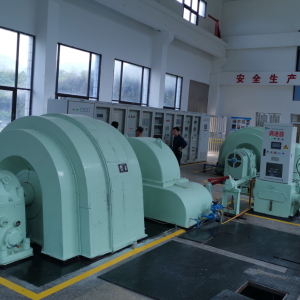
Water turbines and hydro turbine generators are basic equipment. In order to ensure safe and economical operation, the plant is also equipped with corresponding mechanical and electrical equipment, such as hydraulic turbine governors, hydraulic devices, excitation equipment, low-voltage switches, automatic operation and protection systems, etc. In the step-up switch station of idroelettricità station, step-up transformers, high-voltage distribution switching devices, transformers, lightning arresters, etc. are mainly set up to receive and distribute electrical energy. The final power is delivered to the user through transmission lines and step-down substations. These devices are required to be safe, reliable, economical and efficient. For this reason, the design, construction, and installation must be carefully studied.
Gestione delle operazioni Oltre alle proprie condizioni come i parametri delle vie navigabili e le caratteristiche del serbatoio, il funzionamento della centrale idroelettrica è strettamente correlato alla spedizione della rete e il serbatoio della centrale idroelettrica dovrebbe essere mantenuto il più possibile a un livello dell'acqua elevato, ridurre le acque reflue, E massimizzare la generazione di energia della centrale idroelettrica o ridurre al minimo il consumo di carburante del sistema di alimentazione per ottenere i più alti benefici economici della rete elettrica. Per le centrali idroelettriche e i serbatoi con controllo delle inondazioni o altre attività di utilizzo dell'acqua, la pianificazione del controllo delle inondazioni e l'approvvigionamento idrico dovrebbero essere eseguite in tempo, il controllo delle inondazioni e la capacità del serbatoio dovrebbero essere ragionevolmente organizzati e i requisiti di base dei servizi competenti dovrebbero essere soddisfatti in modo completo, e dovrebbe essere stabilita la modalità di funzionamento ottimale del serbatoio. Quando c' è un gruppo di serbatoi nella rete elettrica, i vantaggi di compensazione reciproca del gruppo del serbatoio dovrebbero essere pienamente considerati. (Vedi Pianificazione operativa della stazione idroelettrica)
Benefit evaluation
Il reddito finanziario ottenuto dalla generazione di energia idroelettrica che fornisce energia alla rete elettrica e agli utenti è i suoi vantaggi economici diretti, ma ci sono anche benefici indiretti e sociali del reddito non finanziario. Alcuni paesi in Europa e negli Stati Uniti implementano una varietà di sistemi di prezzi dell'elettricità, come il calcolo dei prezzi dell'elettricità in diversi momenti della giornata e in diverse stagioni dell'anno, prezzi diversi dell'elettricità per l'alimentazione di emergenza in caso di incidenti e l'addebito dei prezzi dell'elettricità in base alla capacità di kilowatt. Per molto tempo, la Cina ha implementato un unico prezzo dell'elettricità basato sull'elettricità, ma l'energia idroelettrica può anche intraprendere il picco di rasatura, regolazione della frequenza, modulazione di fase e backup di incidenti (rotazione) della rete elettrica oltre a generare elettricità, portando vantaggi economici al funzionamento dell'intera rete elettrica. Oltre a fornire acqua per la produzione di energia, le centrali idroelettriche e i serbatoi danno anche pieno gioco ai vantaggi di utilizzo completi. Pertanto, quando si esegue la costruzione di energia idroelettrica, è necessario considerare la situazione generale dell'economia nazionale, chiarire i benefici economici e condurre una valutazione economica nazionale.
peculiarity
(1) Energy renewability. Since water flow is constantly circulating according to a certain hydrological cycle, it is uninterrupted, so hydraulic resources are a renewable energy source. Therefore, the energy supply of idroelettricità is only the difference between wet and dry years, and there will be no energy depletion problem. However, in particularly dry years, the normal power supply of idroelettricità stations may be disrupted due to insufficient energy supply, greatly reducing output.
idroelettricità
(2) Low power generation cost. Hydropower simply uses the energy carried by the water flow without consuming other power resources. Moreover, the water used by the previous power station can still be used by the next level power station. In addition, because the equipment of idroelettricità stations is relatively simple, their maintenance and maintenance costs are much lower than those of thermal power plants of the same capacity. Including fuel consumption, the annual operating cost of thermal power plants is about 10 to 15 times that of idroelettricità stations of the same capacity. As a result, idroelettricità is less expensive and can provide cheap electricity.
(3) Efficient and flexible. The hydro turbine generator set of the main power equipment of idroelettricità generation is not only highly efficient, but also flexible in starting and operating. It can be quickly put into operation from a standstill state in a few minutes; Complete the task of increasing or decreasing the load in seconds, adapting to the needs of changing power loads, and without causing energy loss. Therefore, the use of idroelettricità to undertake the tasks of peak shaving, frequency regulation, load backup and accident backup of the power system can improve the economic benefits of the whole system.